India is a country with a diverse population of nearly 1.4 billion people. Among this vast populace, a significant number grapple with a critical health issue — Human Immunodeficiency Virus (HIV) and Acquired Immunodeficiency Syndrome (AIDS). This piece will delve into the depth of this issue, examining the state of HIV treatment in India, the challenges faced, and the noteworthy initiatives undertaken to tackle this health crisis.
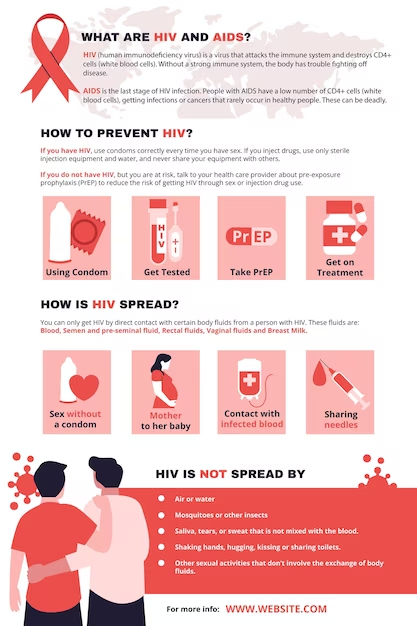
Image Source: FreeImages
HIV/AIDS: An Introduction
HIV (Human Immunodeficiency Virus) is a virus that attacks the immune system, the body’s natural defense against illness. The virus destroys a type of white blood cell called a T-helper cell and makes copies of itself inside these cells. Over time, HIV can destroy so many of these cells that the body can’t fight off infections and disease. When this happens, HIV infection leads to AIDS (Acquired Immunodeficiency Syndrome) and can ultimately lead to death.
HIV/AIDS in India
India has the third-highest number of HIV infections globally, following South Africa and Nigeria. According to the National AIDS Control Organization (NACO), an estimated 2.3 million people in India live with HIV. Since 2004, the Indian government has been providing free Antiretroviral Therapy (ART) to HIV-positive people, which has become a lifeline for many who cannot afford the treatment otherwise. ART is a type of therapy that stops the replication of the virus, helping patients live longer and reducing the risk of transmission.
The State of HIV Treatment in India
The Indian government, under the National AIDS Control Program (NACP), has been making concerted efforts to provide comprehensive care, support, and treatment to people living with HIV/AIDS. The primary focus is on providing free antiretroviral treatment and ensuring adherence to ART.
Antiretroviral Therapy (ART)
Antiretroviral therapy (ART) is the standard treatment for HIV. This therapy uses a combination of HIV medicines to prevent HIV from replicating. By taking ART regularly, people living with HIV can keep the virus under control, live healthier lives, and significantly reduce their risk of transmitting the virus to others. In India, the government provides these medicines free of cost to the patients.
Challenges in HIV Treatment
Despite the efforts, the HIV treatment scenario in India is fraught with challenges. These range from social stigma and discrimination to logistical and infrastructural issues in the health care system.
Drug Shortages
One of the significant challenges in the HIV treatment arena in India is the shortage of ART drugs. Activists claim that the supply of these life-saving medications has been irregular, with many medicines no longer available in centers. This has led to patients receiving drugs for only a few days, while some aren’t receiving any at all. The high cost of these drugs in private pharmacies presents an additional hurdle for those who can’t afford them.
Protests Against Drug Shortages
The precarious situation described above led to protests by HIV-positive people in New Delhi. They demanded a regular supply of ART drugs across the country. The demonstration lasted 42 days and ended when the government resumed the interrupted supply of the drugs.
The Role of Activist Groups
Activist groups played an instrumental role in the protests. Organizations like Delhi Network of Positive People (DNP Plus) stood their ground, insisting that they would not call off their protest until their main demand – the regular monthly supply of drugs to all patients – was met.
Government Response
Contrary to the claims of activists, the health ministry maintained that there was no stock-out of drugs. They assured that there were no interruptions or non-availability of treatment services or ARV medicines at the national and state levels.
Resumption of Drug Supply
Following the protests and the persistent demands of the activists, the National AIDS Control Organization (NACO) reportedly resumed the supply of ART drugs. Activists reported that ART centers across the country began to hand out at least one month’s supply of drugs to each patient, fulfilling the main demand of the protesters.
The Way Forward
While the resumption of drug supply is a significant step, it highlights the need for a more reliable and robust system to ensure the continuous availability of ART drugs. The protest has brought attention to the crisis and has shown the power of collective action and the critical role of activist groups. However, systemic changes are needed to prevent such crises in the future.
Conclusion
The state of HIV treatment in India is a complex issue, with numerous challenges and some noteworthy progress. The recent protests and their successful resolution highlight the power of collective action and the importance of government accountability. Going forward, there needs to be a consistent focus on improving the availability and accessibility of HIV treatment, along with efforts to address the stigma and discrimination associated with the disease. The battle against HIV/AIDS in India is far from over, but with concerted efforts from all stakeholders, there is hope for a future where every person living with HIV in India has access to the care and treatment they need.